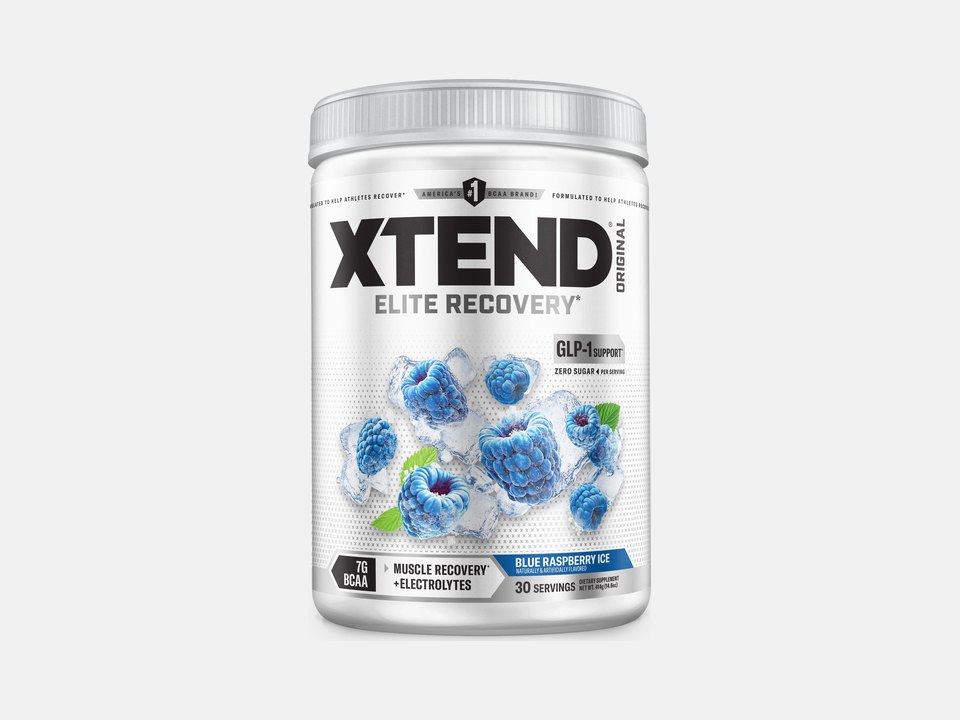
Product imagery supplied by the retailer. Packaging may vary — verify the Supplement Facts panel on the container you receive.
Xtend
Original BCAA
Our analysis — editorial take, not from the label
Longtime intra-workout staple with a fully dosed 7 g BCAA panel plus glutamine and citrulline malate, though it covers only three of the nine essential amino acids.
- EAAs
- —
- BCAAs
- 7 g
- Leucine
- 3.5 g
- Servings
- 30
Price tier: Mid-range · relative cost per full serving across this database
We don't list dollar prices — they change daily and go stale. Check the live price instead:
View current price at Amazon Compare all amino formulasScoop Sense doesn't collect user reviews and won't invent them. Read customer reviews on Amazon
Affiliate links — Scoop Sense may earn a commission at no additional cost to you.
Wide fruit-flavor range sweetened with sucralose and acesulfame potassium.
Label verified: July 2026 · View supplement facts image
Label data
Per full serving · 30 servings per container · from the manufacturer's panel
| BCAAs | 7 g |
|---|---|
| Leucine | 3.5 g |
| BCAA 2:1:1 blend | 7 g |
| L-Leucine | 3.5 g |
| L-Glutamine | 2.5 g |
| Electrolyte blend | 1.17 g |
| Proprietary blend | Total only — source ratio undisclosed |
Primary label source: Tiger Fitness label listing · verified July 2026
Cautions
- BCAA-only formulas lack six of the nine essential amino acids
- Amino drinks supplement protein intake, not replace it
Formulated for healthy adults — not intended for anyone under 18. Full health & safety notes
Product details
Where this label sits
Xtend Original BCAA is one of the amino formulas in the Scoop Sense database. The label uses at least one proprietary blend, so a blend total stands in place of the individual amounts inside it. It runs 30 servings per container at the full labeled serving. Everything on this page comes from the manufacturer's supplement facts panel as of July 2026 — never from the marketing page.
Key ingredients & studied doses
- BCAA 2:1:1 blend · 7 g. The branched-chain trio studied for supporting muscle recovery and reducing post-training soreness.
- L-Leucine · 3.5 g. The amino acid most directly tied to triggering muscle protein synthesis in research.
- L-Glutamine · 2.5 g. The most abundant free amino acid in muscle tissue, commonly added to recovery formulas.
- Electrolyte blend · 1.17 g. Sodium, potassium, and magnesium to support hydration during sweat loss.
Flavors & sweetener
Wide fruit-flavor range sweetened with sucralose and acesulfame potassium.
Who it's best for
A BCAA-only formula — three of the nine essential amino acids, which suits taste-driven intra-workout sipping more than protein replacement. Skip it if you want every individual dose disclosed on the label. Derived from the label figures above — not medical advice.
How we log this label
Every entry is built the same way: we read the current supplement facts panel, log each disclosed dose, compare it against the amounts used in published research, flag proprietary blends, and state the cautions plainly. The full methodology explains each step.
This label against the research
How we evaluate labelsEach bar shows the amount commonly used in published human research, and where this label's dose falls against it. Research amounts are context, not a recommendation — they are not doses, and nothing here is medical advice. The bars compare what the label states; we do not laboratory-test the product to confirm it.
-
Leucine3.5 g
At or above the studied amount0studied range 0.7 g–3 g4 g
The ISSN position stand puts an acute protein dose at 700–3000 mg of leucine, and about 1–3 g per meal as the amount needed to stimulate protein translation.
Source: Jäger et al., Journal of the International Society of Sports Nutrition 2017 — “Acute protein doses should strive to contain 700–3000 mg of leucine and/or a higher relative leucine content”
One or more amounts on this label sit inside a proprietary blend, so the individual doses behind the blend total cannot be compared at all.
What other people say
Why we don't rate productsTwo different things, side by side: the rating the seller publishes on its own store, and what independent users write in public threads. Scoop Sense writes neither and collects no reviews of its own. Neither is evidence that a product works — they describe what people experienced and expected, not what the research shows.
On the seller's page
4.8 / 5
432 ratings
The brand's own storefront, read July 2026. A seller's rating is collected and moderated by the seller — treat it as a marketing figure, not an independent one.
What people actually report
Long-time users are more divided over flavor and occasional side effects than over whether BCAAs themselves do anything, with some drinking Xtend mainly for its electrolytes rather than muscle recovery.
- mixed Taste. Flavor opinions split sharply by variant; some users love watermelon and blue raspberry while others found a newer cherry flavor hard to get down even after trying.
- negative Reported side effects. One user described headaches, nausea, bloating, and dizziness after several days of regular use, unsure if it was Xtend specifically or BCAAs generally.
- mixed Used for electrolytes, not gains. An outdoor worker said the benefit he felt after hard labor came more from the electrolyte blend than from the BCAAs themselves.
Read the threads yourself
-
“I even tried chugging it. lol, This stuff is gross.”
r/Supplements thread, 2024 -
“I’ve had a couple headaches, nausea, bloating, dizziness, balance issue’s, and fatigue at various points after consumption.”
r/Supplements thread, 2022 -
“I have been taking xtend bcaas because they make me feel better after a hard job. I figured it’s more so from the electrolytes as opposed to the bcaas.”
r/Supplements thread, 2019
Common questions about Xtend Original BCAA
Is Xtend Original BCAA an EAA or a BCAA product?
BCAA-only: it supplies the three branched-chain aminos (7 g per serving) but not the other six essential amino acids that full-EAA formulas include.
What does the proprietary blend in Xtend Original BCAA hide?
The BCAA 2:1:1 blend lists 7 g as a combined total. A blend total tells you the sum of its ingredients, not the individual doses inside it — which is why blend entries can't be checked against studied amounts.